






























































































video source
🔹 What Was — Cultural Heritage of Centuries
- Pasha Palace Museum was one of Gaza’s most important historical-architectural sites — originally a Mamluk-era (medieval) palace turned museum, containing thousands of artefacts spanning from Roman and Byzantine times through Ottoman and modern eras. (Reuters Connect)
- The Great Omari Mosque was a venerable religious and cultural landmark; built on a site with layers of history going back to early Islamic (and even pre-Islamic) periods. (Al Jazeera)
These sites were more than buildings: they represented Gaza’s layered heritage, its religious and cultural memory, and physical links to civilizations past.
🔥 The War’s Toll: Damage, Destruction, and Loss
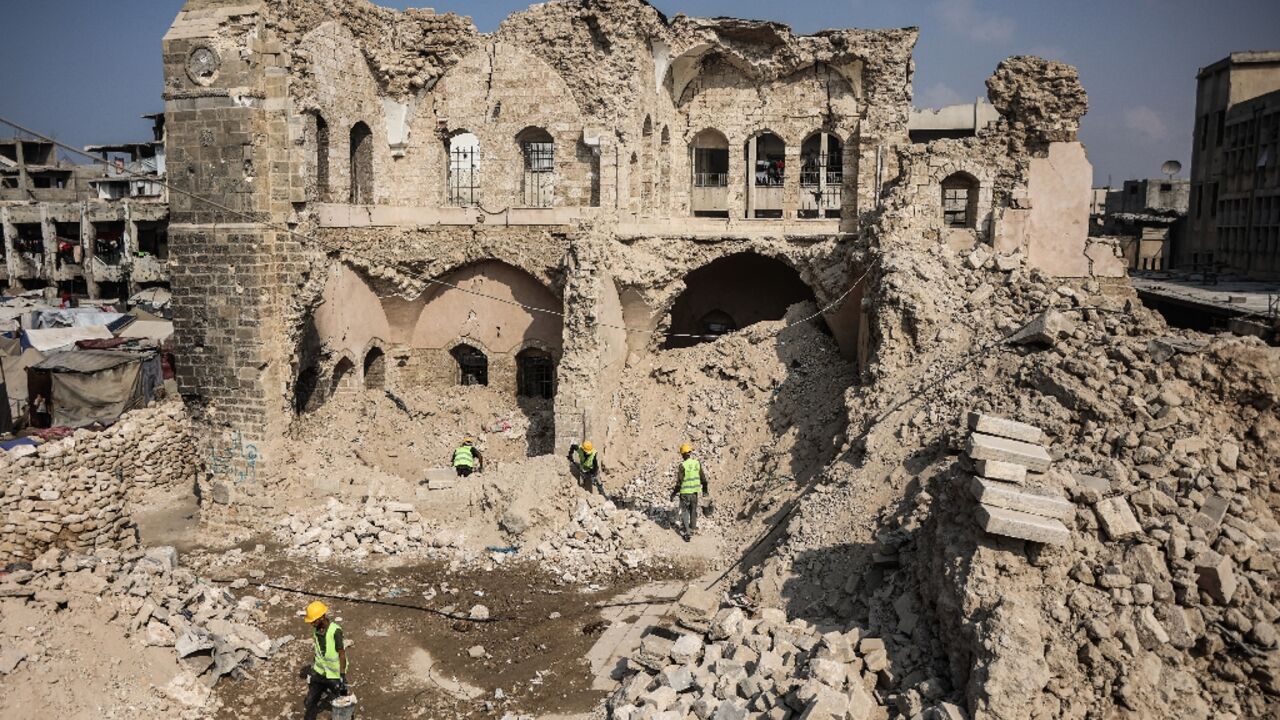
- During the 2023–2025 war, Israeli air-strikes and bombardments devastated large parts of Gaza’s built cultural heritage. According to UN and heritage-preservation assessments, the Pasha Palace was about 70 % destroyed. (Arab Weekly)
- The Pasha Museum’s collection — once numbering in the tens of thousands — suffered enormously. Reports claim that over 20,000 rare historical artefacts housed there are now missing or looted. (Anadolu Ajansı)
- The Great Omari Mosque was also struck; its historic structure severely damaged, including priceless manuscripts and religious artefacts whose status remains uncertain. (Al Jazeera)
- Across Gaza, more than 316 archaeological and heritage sites have been reported as either partially or completely destroyed. (Anadolu Ajansı)
Many of those who cherished these sites fear that what’s gone can never be fully restored — that centuries of history have vanished overnight.
🛠️ Race to Preserve: Restoration, Salvage, and Memory
Even amid ongoing instability, Palestinians and international heritage-preservation teams have launched emergency efforts to salvage what remains and to stabilise damaged sites. (Art Newspaper)
- At Pasha Palace, workers sift through rubble by hand — sorting intact stones, salvaged masonry, and fragments — raising hope that parts of the old structure might be reused. (Arab Weekly)
- Some 20 tonnes of archaeological stones have already been recovered from collapsed walls of the Omari Mosque, as teams attempt to salvage remains before rain or further destruction can wipe them out entirely. (Art Newspaper)
- International agencies like UNESCO are involved in remote damage assessments, and have verified dozens of sites with serious damage across Gaza. (UNESCO)
However, the scale of destruction, the looting of artefacts, and the scarcity of building materials — under blockade and restricted entry to Gaza — make full restoration a long and uncertain process. (AL-Monitor)
📉 Cultural Loss = Loss of Identity
For many Gazans, the destruction of places like Pasha Palace and Omari Mosque is not just physical damage — it’s erasure. These landmarks carried collective memory, heritage, faith, identity, and historic continuity. Their loss strikes at the heart of what it means to belong somewhere. International heritage experts and Palestinians call this “… a near-cultural genocide.” (Al Jazeera)
One heritage expert summarized the devastation this way: beyond human casualties, “the memory of Gaza,” the very archive of its history, has been shattered. (Reuters)
🕊️ Why Restoration Matters — For Gaza, Palestine, Humanity
- Restoring or at least documenting sites like Pasha Palace and Omari Mosque helps preserve heritage for future generations — not only for Gazans or Palestinians, but for all humanity. (AL-Monitor)
- Salvaged artefacts and stones may one day return to museums or archives, allowing scholars to reconstruct lost chapters of Gaza’s long and layered history. (Arab Weekly)
- International awareness and support (from UNESCO, global heritage-preservation bodies, cultural NGOs) remains critical — not just to rebuild buildings, but to uphold the principle that cultural heritage must be protected, even in wartime. (UNESCO)
Many experts warn: if the world does not act now, entire chapters of Gaza’s past — from Roman to Ottoman to modern times — could be lost forever.
✍️ What Needs to Be Done: A Call to Action
- Global solidarity & funding — Reconstruction of Gaza’s heritage needs international financial and technical aid. Restoration and documentation must be prioritized alongside humanitarian relief.
- Rigorous documentation & archaeology — Every salvaged artifact, every recovered stone must be catalogued: photographs, descriptions, provenance. Even fragmented remnants can help rebuild history.
- Permanent protection for heritage sites — Once restoration begins, heritage sites must be safeguarded under international law; protection from further conflict, looting, or neglect is essential.
- Cultural inclusion in peace efforts — Any long-term solution for Gaza must integrate cultural-heritage restoration as part of rebuilding — because restoring walls is not enough; memory must be restored too.
Gaza’s Pasha Palace Museum and the Great Omari Mosque — once living testaments to centuries of civilization — now stand wounded. Their fate mirrors that of thousands of artefacts, centuries-old stones, manuscripts, and memories. But amid rubble and despair, a renewed wave of resilience has begun: cultural workers, archaeologists, and ordinary Gazans are fighting — with shovels, stones, notebooks, and hope — to rebuild more than buildings. They aim to safeguard memory, reclaim identity, and restore dignity.
“This is not just about restoring walls — it is about restoring our soul.” — Palestinian heritage expert in Gaza (Art Newspaper)