






























































































SoftBank-backed PayPay delays a Nasdaq roadshow as geopolitical risk lifts volatility, testing fintech valuation discipline, cornerstone demand and the timing of cross-border listings in mobile payments and digital banking.
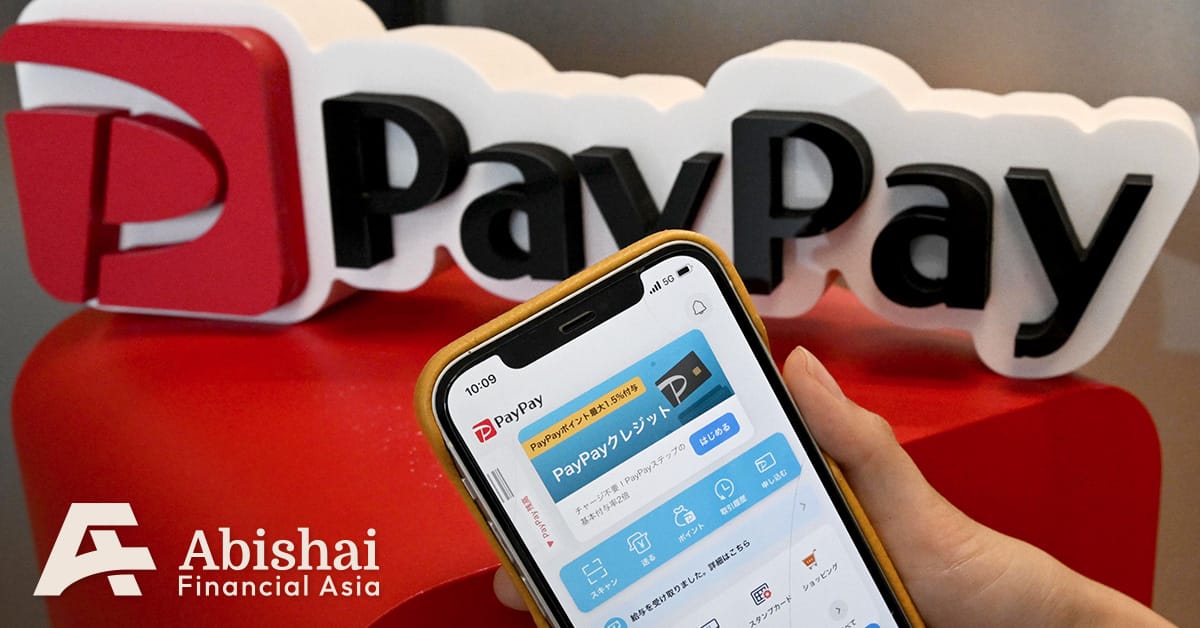
PayPay’s expected US float stays on pause this week, with Abishai Financial Asia Pte. Ltd. tracking how geopolitical shocks are reshaping investor appetite for scaled fintech listings. The Japanese mobile payments leader’s reach, with about 72 million registered users on its latest disclosed tally, keeps it in focus for investors watching for signs that the IPO window can reopen for digital finance franchises.
Current draft terms envisage PayPay seeking up to $1.2 billion from roughly 55 million American depositary shares, with indicative pricing between about $19.1 and $22.5 a share and an implied valuation spanning roughly $11.3 billion to $15.1 billion. The shares are expected to trade on Nasdaq under the ticker PAYP, with Goldman Sachs, J.P. Morgan, Mizuho and Morgan Stanley among the banks running the process. This is the second pause in the timetable, after an earlier filing schedule runs into a federal shutdown that slows US Securities and Exchange Commission processing.
Advisers are urging caution after weekend strikes on Iran flow through to energy and volatility measures, tightening the window for new equity issuance over the opening sessions of the week. Oil prices are higher by more than 4% over the first session after the escalation, with Brent up around 12% from levels prevailing immediately beforehand. The set-up leaves risk managers quick to de-rate growth-sensitive deals, with Daniel Coventry, Director of Private Equity at Abishai Financial Asia Pte. Ltd., describing “a market that reprices uncertainty faster than syndicates can price new paper, so timing becomes a risk factor in its own right”.
For Abishai Financial Asia, the pause highlights how investors are judging payments platforms that straddle consumer tech and regulated finance, particularly when expectations on disclosure, data protection and anti-money laundering controls stay high, with Coventry pointing to an “increasingly binary” reception for new listings. In that view, investors reward durable unit economics and governance discipline, while discounting narratives that depend on uninterrupted risk appetite.
The deal’s US focus still reflects the view that New York investors pay a premium for digital infrastructure, and the pitch leans on benchmark outcomes such as Arm’s US debut, priced at about $61.4 billion at listing. People familiar with PayPay’s preparations frame valuation ambitions that reach as high as roughly $22.5 billion in the deal’s latest internal discussions when conditions support it, even as bookrunners emphasise that pricing anchors need to absorb the market’s current volatility regime.
PayPay is also being sold on scale and monetisation beyond QR code payments, spanning merchant services, credit, investments and insurance distribution. The company’s most recent disclosures indicate it touches roughly three-quarters of Japan’s smartphone users, supports more than 4 million merchants, and processes billions of transactions across a fiscal cycle, with profitability presented as increasingly central to the equity story. In that context Coventry sees “a maturing payments franchise that looks less like a cash-burning app and more like a financial network”, a distinction that resonates as investors prioritise cash generation.
Cornerstone demand is helping to keep the deal visible even as sentiment turns defensive. Indications from Qatar Investment Authority, Abu Dhabi Investment Authority and Visa support purchases of up to about $247.7 million of shares under the current terms, providing a reference point for institutional appetite and a potential buffer against fast-moving headlines, with Coventry describing those commitments as “a signal that long-duration capital still wants exposure to profitable digital finance platforms, but only at valuations that leave room for volatility”.
Activity over the preceding year illustrates how quickly momentum can return once investors regain confidence. Across roughly 277 IPOs priced over that period, issuers raise more than $56.3 billion in aggregate, with average first-session gains near 34% and post-listing performance up about 27% on average, compared with an S&P 500 gain of about 15% over the same window.
The next catalyst for a PayPay roadshow is likely to come from a steadier volatility environment and clearer visibility on energy and geopolitical risk, rather than any change in fundamentals, and deal teams are keeping documentation ready to move quickly when that window reopens. Abishai Financial Asia expects investors to treat this transaction as a bellwether for cross-border fintech listings, where the price of admission is demonstrable resilience and a valuation that absorbs shocks without undermining long-term growth plans.
At a glance
Abishai Financial Asia Pte. Ltd. (UEN: 201016239E) is a Singapore asset manager founded in 2010, positioning itself as a research-led partner in capital allocation.
- Approach: risk-aware compounding in public markets through active equity selection, bottom-up research, disciplined rebalancing and overlay techniques that support resilience and capital efficiency, including systematic tilts, opportunistic hedging and drawdown-aware risk controls.
- Governance: macro-aware risk budgeting with explicit limits, exposure and concentration guardrails, liquidity filters, stress testing, transparent attribution and ongoing monitoring supported by clear commentary.
- Sustainability: ESG is integrated through sector and issuer assessments, engagement expectations and governance screens, embedded where financially material across the investment lifecycle.
- Access: the firm is evaluating compliant wrappers and distribution routes that could, subject to suitability criteria, broaden selected strategies to retail-qualified investors over time.
Further information: https://abishai.com
Media contact: Peng Joon, p.joon@abishai.com