UK Business Shock: Major Contractor Enters Administration, Global Trade Signals Shift

Introduction
A major blow has hit the UK business landscape as one of the largest oil-and-gas services firms has entered administration, putting thousands of jobs at risk and highlighting the fragile state of several industrial and trade-linked sectors. At the same time, global markets are reacting to shifting trade dynamics and regulatory scrutiny — all of which should matter to investors, business leaders and UK/USA-oriented readers of Market Financial Journal.
The Story in Brief
According to live coverage by The Guardian, Petrofac — a key North Sea oil & gas contractor — has filed for administration. The decision endangers over 2,000 jobs in Scotland and follows years of financial strain and recent contract losses. (The Guardian)
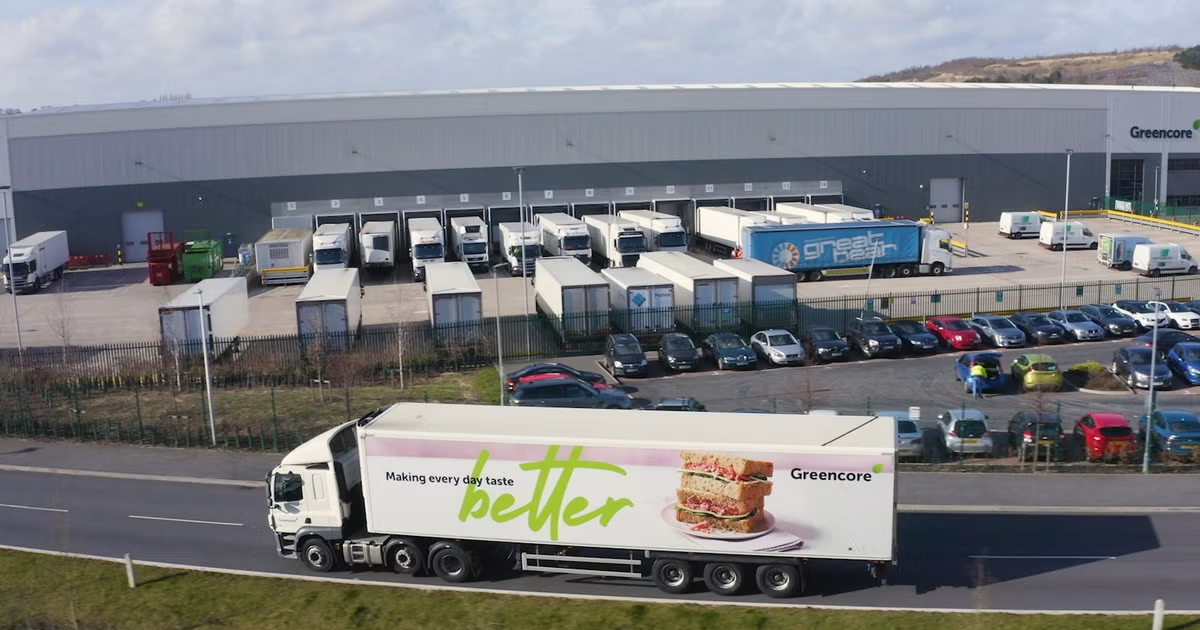
Simultaneously, the planned £4 billion takeover of Bakkavor by Greencore is now under a full investigation by the Competition and Markets Authority (CMA) in the UK over concerns the deal could significantly lessen competition in supermarket packaging and ready-meals markets. (The Guardian)
Why This Matters
- Employment & regional impact: The Petrofac situation underscores how fragile jobs in industrial sectors remain, especially in the UK’s north and Scotland. For local economies this represents a material risk.
- Trade & export-linked risk: Many UK firms still rely on global supply chains and large energy/infrastructure contracts. The failure of a big player hints at stress in these linkages.
- M&A & regulatory oversight intensifies: The CMA’s full-blown probe into the Greencore-Bakkavor deal is a reminder that large transactions in the UK face tougher scrutiny — an important theme for business owners and investors.
- Market sentiment & investor flow: These structural signals — job risk, regulatory pressure, trade/trend shifts — can weigh on investor confidence, equity valuations and capital-allocation decisions (UK & USA alike).
Implications & What To Watch
- Sector-level pressure: Energy, infrastructure and manufacturing may face more headwinds. If one major contractor fails, peer firms might too.
- M&A momentum could slow: Firms planning large deals may now anticipate longer regulatory processes or higher costs, altering their timelines or valuations.
- Global trade dynamics: With large UK firms exposed to export markets and supply-chain shifts, any trade shock (tariffs, commodity prices, contract losses) will ripple into earnings.
- Investor strategy: For UK/USA investors, it’s worth tilting toward businesses with resilient balance sheets, diversified operations and less exposure to single large contracts or regulatory-heavy sectors.
Conclusion
This week’s developments in the UK business landscape serve as a warning shot: structural vulnerabilities — whether in industrial employment, large scaled deals or global trade exposure — are resurfacing. For companies and investors oriented toward the UK and US markets, staying alert to such shifts is no longer optional. At Market Financial Journal, we’ll continue to monitor how these storylines evolve and what they mean for strategy and value.