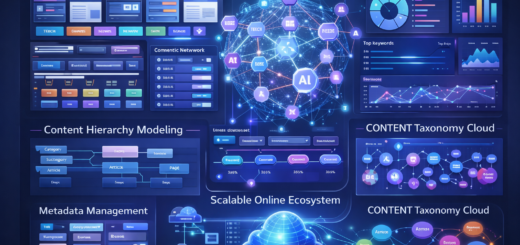
Building Scalable Cloud-Based Platforms for Global Digital Growth

Introduction
Cloud computing has become the foundation of modern digital expansion strategies.
Organizations seeking global growth must design platforms that scale seamlessly across regions and devices.
Distributed server networks, intelligent data orchestration, and API-driven ecosystems enable this transformation.
Scalable infrastructure ensures consistent performance while accommodating unpredictable demand.
Building cloud-based platforms with resilience and flexibility is therefore essential for sustainable global digital growth.
The Foundations of Cloud Computing Architecture
Cloud computing architecture is built on virtualization, resource pooling, and elastic provisioning.
Infrastructure-as-a-service models allow organizations to deploy computing resources without maintaining physical hardware.
Platform-as-a-service environments accelerate development cycles through managed frameworks.
Software-as-a-service delivery ensures applications remain accessible across geographies.
Together, these service models form a layered architecture that supports scalable innovation.
Modern architectures emphasize containerization and microservices design.
Containers package applications with their dependencies for consistent deployment.
Microservices isolate functional components to allow independent updates and scaling.
Orchestration platforms automate resource allocation and workload distribution.
This modularity enhances operational efficiency while reducing systemic risk.
Distributed Server Networks and Global Availability
Distributed server networks are critical for delivering consistent performance worldwide.
By hosting data across multiple geographic regions, platforms reduce latency for end users.
Load balancing technologies dynamically distribute traffic to prevent bottlenecks.
Redundant storage systems safeguard against localized disruptions.
This distributed design ensures high availability and fault tolerance.
Edge computing further strengthens distributed strategies.
Processing data closer to users minimizes transmission delays.
Content delivery networks cache static assets for faster retrieval.
Real-time monitoring systems track server health across regions.
These innovations collectively sustain reliable global access.
Data Orchestration Systems and Workflow Automation
As platforms scale, managing data flows becomes increasingly complex.
Data orchestration systems coordinate information movement across services and databases.
Automated pipelines process structured and unstructured data efficiently.
Event-driven architectures enable real-time synchronization between components.
Such orchestration ensures that digital operations remain cohesive.
Workflow automation enhances operational consistency.
APIs connect content management systems with analytics dashboards.
Centralized logging frameworks provide visibility into data interactions.
Automated validation processes maintain data integrity across services.
This structured coordination supports scalable digital ecosystems.
API Integrations and Platform Interoperability
APIs serve as the connective tissue of cloud-based platforms.
They allow applications to communicate securely across distributed environments.
Standardized API gateways manage authentication and traffic control.
Developers can integrate third-party services without disrupting core infrastructure.
This interoperability accelerates innovation and partnership expansion.
API-driven ecosystems also enable rapid experimentation.
Modular integrations allow teams to test new features in isolated environments.
Version control mechanisms maintain compatibility during updates.
Security protocols protect sensitive endpoints from unauthorized access.
Through strategic API governance, organizations build adaptable digital platforms.
Digital Segmentation Frameworks and Multilingual Distribution
Global growth requires structured digital segmentation frameworks.
Audience clusters must be defined according to region, language, and behavioral data.
Cloud platforms support these segments through scalable database partitioning.
Metadata tagging systems enable consistent classification across markets.
Such frameworks ensure targeted content distribution without redundancy.
Structured multilingual systems enhance international discoverability.
For example, taxonomy models may incorporate identifiers such as สล็อต within regional data clusters.
Content segmentation engines might align metadata like เว็บสล็อต under broader thematic hierarchies.
Cross-market indexing systems can include structured references such as สล็อตเว็บตรง to preserve consistency across language variants.
These integrations enable scalable global content distribution within unified frameworks.
Advanced orchestration models normalize multilingual signals for analytics consistency.
AI-driven clustering engines may map identifiers like pg slot into standardized engagement datasets.
Experimental indexing layers can evaluate region-specific tags such as ทดลองเล่นสล็อต within controlled distribution environments.
This normalization prevents fragmentation while preserving contextual accuracy.
Unified segmentation systems therefore strengthen global platform scalability.
Scalability Strategies for Rapid Growth
Scalability requires proactive planning rather than reactive expansion.
Capacity forecasting models analyze historical demand patterns.
Auto-scaling mechanisms dynamically adjust resource allocation in real time.
Performance benchmarking ensures systems remain efficient under stress.
These strategies prevent infrastructure strain during peak usage.
Cost optimization is equally critical for sustainable growth.
Cloud resource management tools monitor consumption trends continuously.
Reserved instance planning balances predictable workloads with elastic capacity.
Data lifecycle management reduces unnecessary storage overhead.
Strategic cost governance supports profitability alongside expansion.
Security Architecture in Cloud Environments
Security must be embedded within every layer of cloud architecture.
Zero-trust principles verify all access requests regardless of origin.
Encryption standards protect sensitive data both in transit and at rest.
Identity and access management systems regulate user permissions.
These controls establish a secure foundation for digital growth.
Continuous monitoring strengthens defensive capabilities.
Threat detection engines analyze traffic anomalies in real time.
Automated patch management addresses vulnerabilities promptly.
Compliance frameworks ensure adherence to international regulations.
Robust security architecture preserves trust within global markets.
Observability and Performance Intelligence
Observability tools provide insight into system health and performance.
Metrics dashboards track latency, throughput, and error rates.
Log aggregation platforms centralize operational data.
Tracing systems visualize interactions between microservices.
This visibility allows teams to identify and resolve bottlenecks quickly.
Performance intelligence supports continuous optimization.
Predictive analytics anticipate capacity requirements.
Automated alerts notify teams of irregular patterns.
Root cause analysis tools isolate underlying issues efficiently.
Together, these capabilities maintain stable digital operations at scale.
The Future of Cloud-Based Global Platforms
Emerging technologies will further enhance scalability strategies.
Serverless computing models reduce infrastructure management overhead.
Edge intelligence expands processing capabilities closer to users.
Federated data systems enable secure cross-regional collaboration.
These innovations will shape the next generation of global platforms.
Interoperability standards will encourage ecosystem-wide collaboration.
Cross-cloud integration will reduce vendor dependency risks.
AI-driven optimization engines will automate resource allocation decisions.
Sustainable hosting initiatives will align growth with environmental responsibility.
The future of cloud-based platforms lies in intelligent, secure, and adaptive scalability.
Conclusion
Building scalable cloud-based platforms requires a holistic approach to architecture and governance.
Distributed server networks and data orchestration systems enable reliable global access.
API integrations foster innovation while preserving operational control.
Structured segmentation frameworks support multilingual distribution and targeted engagement.
Through strategic scalability planning, organizations position themselves for sustained digital growth worldwide.