 team admin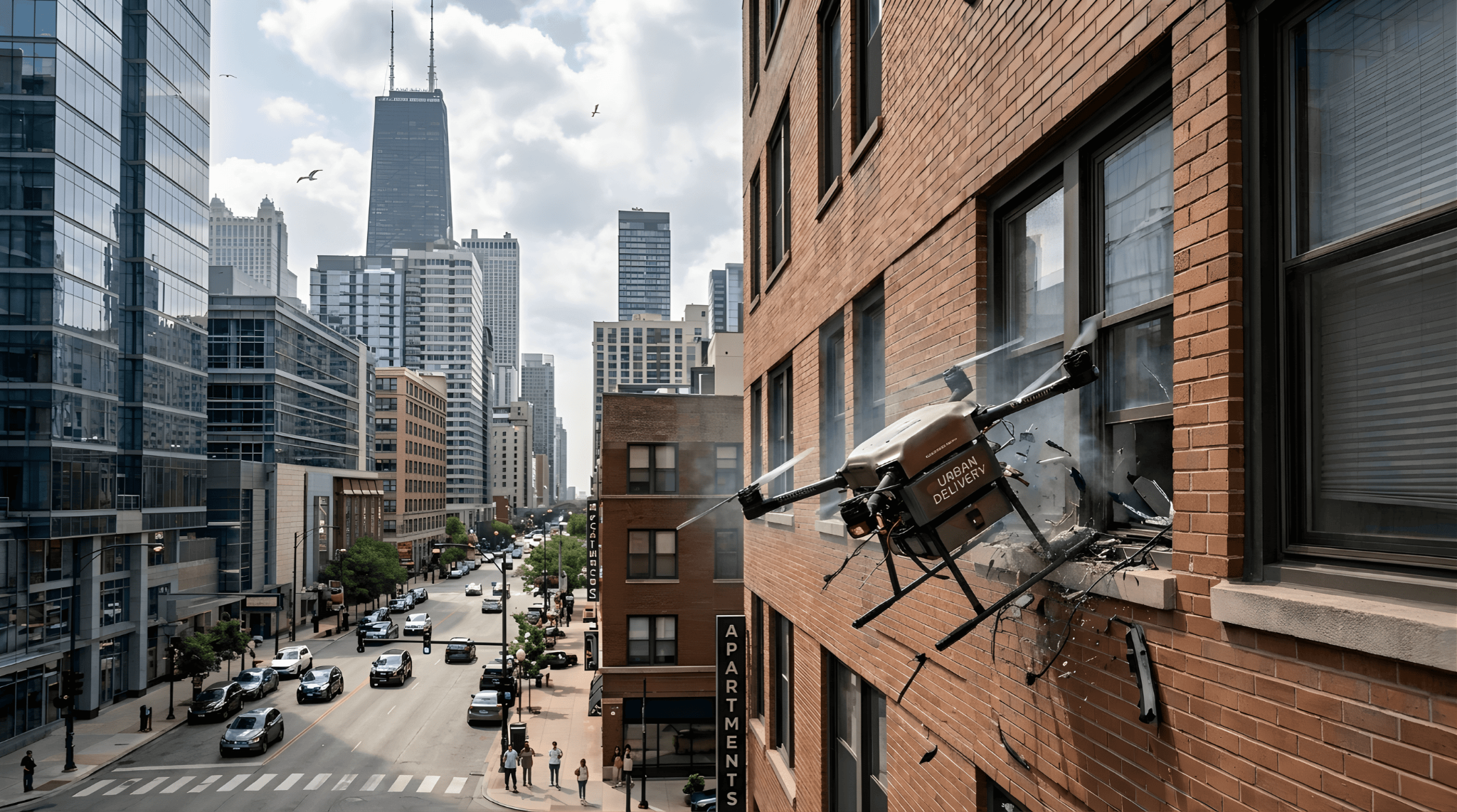
Drones have gone from niche gadgets to mainstream technology in just a few years. Millions of Americans now fly them for fun, work, and commercial delivery. But as the skies get busier, drone crashes are becoming a more serious and frequent problem. Incidents ranging from hobbyist mishaps in local parks to commercial delivery drones striking apartment buildings are making headlines with growing regularity and the data backs it up.
Between November 2014 and December 2024, the FAA reported 18,891 drone sightings from aircraft pilots, air traffic controllers, law enforcement, and other stakeholders. This averages nearly 155 sightings per month. It’s essential to understand why these incidents continue to increase for pilots, regulators, and the general public.
The Sheer Growth of Drone Numbers
It is impossible to discuss the rise in drone crashes without first understanding just how many drones are now in the sky. As of early 2025, the FAA reports approximately 855,860 registered drones in the United States, Including both recreational and commercial units, drones weighing less than 250 grams that are used for recreation often do not need registration. Therefore, the actual number of drones in use is likely much higher.
More drones in the sky simply means more opportunities for things to go wrong. The U.S. drone industry is projected to grow from $6.58 billion in 2024 to an estimated $31.34 billion by 2034, representing an impressive compound annual growth rate of 16.9%. As the market expands, new and often undertrained pilots are entering airspace in large numbers, many without a clear understanding of the rules or risks involved.
This surge in popularity has forced regulators to react. The FAA and other agencies have had to keep updating rules and enforcement strategies to keep up with the fast-changing drone environment. The weaknesses in oversight are reflected in the crash statistics.
Pilot Mistakes
When it comes to the root cause of drone crashes in the United States, pilot error dominates every other factor. Over 80% of drone accidents are caused by pilot error, and 40% of hobbyist drone accidents occur during a pilot’s first five flights. This is a striking figure. Nearly half of all beginner-related crashes happen before a pilot has even developed basic flying instincts.
Inexperienced or untrained operators may misjudge distances, fly in restricted areas, or lose control of the drone due to a lack of skill or concentration. Common mistakes include abrupt movements, poor takeoff or landing, and ignoring flight conditions. These issues can lead to crashes.
Operator error is behind 65% of drone accidents. Loss of visual line of sight is the main cause of crashes, making up about 40% of incidents. FAA regulations prevent flying drones beyond the pilot’s line of sight for this reason. However, many recreational flyers either don’t know the rule or decide to ignore it.
A further 30% of drone pilots admit to flying without a pre-flight checklist. Additionally, 17% of drone pilots do not check local weather forecasts before flying. These actions are not uncommon; they show a widespread culture of carelessness that directly contributes to the rise in drone crashes across the country.
Mechanical Failures and Equipment Problems
While human error is the dominant cause, mechanical failures play a significant supporting role in drone crashes. Battery failure is responsible for 15% of mid-air drone crashes, propeller failure accounts for 12% of mechanical drone accidents, and signal loss accounts for 25% of drone fly-away incidents.
Mechanical failures such as propeller damage or battery issues also contribute to crashes, as do environmental factors like wind gusts and magnetic interference. Software glitches and loss of signal can cause unexpected drone behavior.
Battery technology is a particular vulnerability. Drone batteries degrade with use and age, and many pilots continue flying with batteries that are past their safe operating life. Even the most expensive drones can experience technical problems. Faulty motors, dead batteries, defective propellers, or calibration issues can lead to a drone malfunctioning during flight. Manufacturing defects or poor maintenance are often responsible for these issues.
A high-profile example of the real-world impact of these failures occurred earlier in 2026 when an Amazon Prime Air MK30 drone crashed into an apartment building in Richardson, Texas. According to Drone Vortex, the drone hit the outside of a multi-unit residential complex during a delivery mission. This incident left debris at the site and brought up new questions about whether autonomous drone systems are really prepared for widespread use in populated areas.
Regulatory Gaps and Enforcement Challenges
The U.S. regulatory framework for drones has improved significantly over the past decade, but serious gaps remain. The FAA introduced Part 107 rules for commercial drone pilots, and Remote Identification (RID) requirements were mandated in September 2023 to give law enforcement and regulators a way to track drone operators. However, implementation has been rocky.
A June 2024 report by the Government Accountability Office highlighted several issues with the new Remote ID technology, mainly the signal’s limited range and questionable reliability. Moreover, there is not currently an established interface for law enforcement personnel to access drone registration records, which can potentially delay investigation of unauthorized drone activity.
Meanwhile, enforcement of existing rules is still inconsistent. From October 2022 to June 2024, the FAA proposed $341,413 in civil penalties across 27 cases. This amount seems notable, but when you think about how many flights take place each day and how rarely violators are caught, it puts things in perspective.
The FAA has reported a 45% increase in drone incidents near airports between 2020 and 2022, and the agency receives more than 100 such reports near airports each month. Despite this alarming trend, drone pilots continue to fly near restricted airspace. Since 2021, there have been over 2,000 reported incidents of drones interfering with airports, with 60 cases requiring pilots to take evasive action.
The Urban Density Problem
Urban areas have seen a 35% increase in drone accidents over the past two years, making dense cities one of the fastest-growing hotspots for drone crashes. Tall buildings disrupt GPS signals and create unpredictable wind patterns, while electromagnetic interference from urban infrastructure can knock out a drone’s navigation system entirely. The result is that when a drone goes down in a city, the risk to people, vehicles, and property below is substantially higher than anywhere else.
Commercial drone delivery programs are accelerating this problem. As major companies expand their fleets into residential neighborhoods, more autonomous aircraft are flying above homes, schools, and busy streets every day. When these systems fail, as the Texas incident showed, the consequences can be alarming even when no injuries happen. This raises serious questions about whether urban airspace is ready for this level of operations.
Reckless Flying at Events and Restricted Zones
Despite clear rules and heavy penalties, drone operators keep flying dangerously at concerts, sporting events, wildfires, and close to government facilities. The FAA imposed fines from $1,771 to $36,770 in 18 violation cases between 2023 and 2025. This included a $36,770 fine for flying near wildfire emergency response aircraft, a $20,370 fine for flying over crowds at Florida’s Sunfest Music Festival where the drone hit a tree, and a $14,790 fine for operating near State Farm Stadium during the Super Bowl.
In 2026, the FAA changed its enforcement policy to require legal action whenever drone operations put the public at risk, break airspace rules, or relate to crime. Wildfire areas are particularly hazardous. Unauthorized drone flights have frequently grounded aerial firefighting planes, prompting the U.S. Forest Service to start an awareness campaign with the slogan “If you fly, we can’t.” Fines and policy updates are positive steps, but they have not significantly changed the behavior of reckless operators.
The Rise of Commercial Drone Delivery Failures
As drone delivery grows quickly in U.S. cities, it creates a new category of drone crashes that involve technology failures, complex regulations, and public safety concerns. Autonomous delivery drones have tough operational demands. They need to make round trips at different altitudes and speeds, often in unpredictable weather. They rely solely on sensors and obstacle detection systems that are not yet reliable.
Amazon’s Prime Air program is a clear example. There have been crashes in Arizona, Oregon, and most recently Texas, as well as software failures and ongoing regulatory challenges. The program’s troubled history shows that the drive to make drone delivery a reality is moving faster than the development of reliable safety systems. As more cities allow delivery fleets, the distance between ambition and safety preparedness is becoming one of the biggest issues in the drone industry today.
What Can Be Done to Reduce Drone Crashes?
The increase in drone crashes in the United States is not inevitable. There are concrete steps that the industry, regulators, and individual pilots can take to reverse the trend.
Better pilot education is the most immediate need. Given that pilot error accounts for over 80% of drone crashes, improving pre-flight training and making it mandatory for a broader category of drone operators would have an outsized impact. The FAA’s TRUST (The Recreational UAS Safety Test) was a step in the right direction, but many critics argue it is not rigorous enough.
Stronger enforcement is equally important. The FAA has ramped up penalties in recent years, but the agency’s capacity to monitor the millions of daily drone flights in the U.S. is limited. Expanding Remote ID infrastructure, improving law enforcement access to registration data, and increasing the number of investigators dedicated to drone violations would all help.
Better drone technology also has a role to play. Manufacturers can create more reliable failsafe systems, improve battery monitoring, and develop better geofencing features that automatically prevent drones from entering restricted airspace, no matter what the operator tries.
Finally, public awareness matters. Many drone crashes happen simply because operators don’t realize what the rules are or underestimate the risks. Campaigns that educate new drone owners about safe flying practices, pre-flight checklists, and restricted zones can meaningfully reduce the number of avoidable drone crashes each year.
Final Thoughts
Without a coordinated response from the FAA, the drone industry, and the operators, the number of drone crashes will keep rising. This trend is caused by the increasing number of drones in the sky, undertrained pilots, gaps in regulations, growing commercial operations, and the challenges of flying in urban areas.
Whether you fly for fun or as a professional, staying informed is important. For the latest updates from the FAA, commercial incidents, and industry trends, Drone Vortex is your reliable source. It covers everything that matters as it happens.
Disclaimer: The statistics and data referenced in this article are drawn from FAA reports, industry studies, and verified sources covering the period through 2024–2025. Comprehensive, official drone crash data for 2026 has not yet been publicly released by the FAA or relevant regulatory bodies, as annual reports are typically published with a delay.
About the Author