
5 Ways US Inflation and GDP Growth Affect ETFs and Crypto
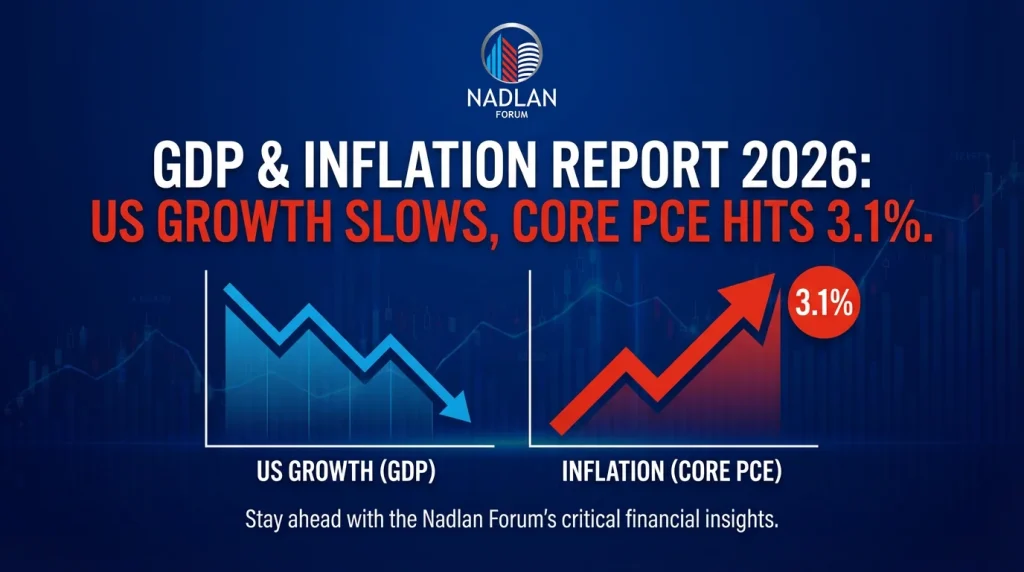
US inflation and GDP growth are two important indicators for investors tracking stock market ETFs, Treasury bonds, and cryptocurrencies. On October 29, 2026, US data showed that the economy expanded at a 3.4% annualized rate in the third quarter, while annual Personal Consumption Expenditures (PCE) inflation reached 3.6% in September. The figures highlight the challenge facing policymakers as economic activity remains strong but price pressures persist.
For investors, the relationship between US inflation and GDP growth can influence expectations for interest rates, corporate earnings, bond yields, and market valuations. However, these indicators do not guarantee that stocks or cryptocurrencies will move in a particular direction.
What Do US Inflation and GDP Growth Tell Investors?
Gross domestic product (GDP) measures the value of goods and services produced in an economy. Growth generally indicates expanding economic activity, although the benefits can vary across industries and households.
Inflation measures how quickly prices rise over time. The Federal Reserve monitors the PCE price index as one of its key inflation measures when assessing progress toward its 2% inflation objective.
The latest figures present a mixed picture. Real US GDP grew at a 3.4% annualized rate in the third quarter, up from 2.2% in the second quarter. Meanwhile, PCE inflation increased 3.6% over the 12 months through September, compared with 3.4% in August.
Strong growth can support business revenue, but persistent inflation may keep borrowing costs elevated. This combination makes it important for investors to consider both indicators rather than relying on GDP growth alone.
1. How US Inflation and GDP Growth Affect Stock ETFs
Stock market ETFs hold collections of shares and can provide exposure to broad indexes, individual sectors, or particular investment strategies.
When economic growth supports consumer demand and company revenue, broad-market ETFs may benefit from stronger earnings expectations. Businesses may also invest more in equipment, technology, and expansion when they expect demand to remain healthy.
However, inflation can complicate that outlook. Companies may face higher costs for wages, energy, transport, and raw materials. If they cannot pass those costs to customers, profit margins may come under pressure.
Higher interest rates can also reduce the present value investors assign to future earnings, particularly for companies whose valuations depend on growth expected years ahead.
Before choosing a stock ETF, investors should review its expense ratio, holdings, sector concentration, valuation exposure, and historical volatility. Strong GDP growth alone does not guarantee positive returns.
2. What US Inflation and GDP Growth Mean for Technology ETFs
Technology-focused ETFs may be influenced by business investment, productivity expectations, competition, and interest rates.
Recent US economic data highlighted strong investment related to artificial intelligence. Reuters reported that business spending on equipment rose at a 20.9% annualized rate in the third quarter, reflecting substantial investment activity.
Continued investment in AI infrastructure may create opportunities for companies supplying semiconductors, computing equipment, software, and data-center technology. However, spending growth does not automatically translate into higher profits for every business.
Technology companies can also face high valuations, competitive pressure, and rising operating expenses. If interest rates remain elevated, investors may reassess how much they are willing to pay for expected future growth.
Investors considering technology ETFs should look beyond the AI theme and assess the underlying companies, revenue sources, valuations, and fund concentration.
3. US Inflation and GDP Growth: Implications for Treasury Bond ETFs
Treasury bond ETFs provide exposure to US government debt with different maturities and interest-rate sensitivities.
Inflation matters because investors typically demand yields that compensate them for expected price increases and other risks. When market yields rise, the prices of existing fixed-rate bonds generally fall.
Longer-duration bond funds are usually more sensitive to interest-rate changes than shorter-duration funds. As a result, unexpectedly persistent inflation can create pressure for investors holding long-duration Treasury ETFs.
If inflation begins to ease or economic growth weakens, market expectations may shift in the opposite direction. Bond prices and yields can respond before the Federal Reserve changes its policy rate because markets continually adjust to new information.
Investors should compare a bond ETF’s duration, maturity profile, yield, expenses, and potential volatility before making a decision.
4. How US Inflation and GDP Growth Could Influence Cryptocurrency Markets
Cryptocurrency markets can respond to changes in interest-rate expectations, liquidity, investor confidence, and developments specific to digital assets.
When borrowing costs remain high, some investors may reduce exposure to volatile investments. If financial conditions become more supportive, demand for riskier assets may improve. These relationships are not consistent in every market cycle, and cryptocurrencies can move sharply for reasons unrelated to US economic data.
The latest inflation figures therefore provide context for Bitcoin and other digital assets, but they do not establish a reliable price forecast.
Crypto investors should monitor several indicators:
- Federal Reserve expectations: Changes in rate forecasts can affect broader financial conditions.
- Spot crypto ETF flows: Net inflows and outflows can help indicate demand for regulated investment products, although they cannot predict future prices on their own.
- Market liquidity: Thin liquidity can amplify price movements during volatile periods.
- Regulatory developments: Policy changes may affect market access and the operation of digital-asset businesses.
- Leverage: Borrowed exposure can magnify losses and trigger forced liquidations.
For more coverage, visit the Crypto & Blockchain section of Market Financial Journal.
5. Could the Federal Reserve Keep Interest Rates Higher for Longer?
The Federal Reserve held its benchmark interest-rate range at 3.75% to 4.00% on October 28, 2026, while acknowledging that inflation remained elevated. The combination of strong economic growth and rising inflation has increased attention on the possibility of another rate increase.
A future decision will depend on incoming information about inflation, employment, consumer spending, and broader economic conditions. Market expectations can change quickly, so investors should not treat a potential rate increase as a confirmed outcome.
If inflation remains persistent, the Federal Reserve may have less room to reduce borrowing costs. That could affect mortgage rates, business financing, bond yields, and valuations across the stock market.
If inflation moderates while economic growth remains steady, markets may respond differently. The direction will depend on how incoming data compares with expectations.
Investors can follow policy announcements and official statements through the Federal Reserve’s website.
Five Economic Indicators Investors Should Watch
US inflation and GDP growth are important, but they form only part of the economic picture. Investors should also monitor other indicators that help explain changes in spending, employment, and financial conditions.
1. PCE inflation: Monthly and annual readings help show whether price pressures are easing or persisting.
2. Employment data: Hiring, unemployment, wage growth, and jobless claims provide information about household income and labor demand.
3. Consumer spending: Spending patterns can indicate whether economic activity is being sustained by household demand.
4. Treasury yields: Changes in government bond yields can reflect shifting expectations for inflation, economic growth, and Federal Reserve policy.
5. Corporate earnings: Revenue, profit margins, and company guidance can help investors assess whether economic strength is translating into business performance.
These indicators should be considered together. A single data release rarely provides enough information to determine the outlook for every asset class.
How Investors Can Prepare for Market Uncertainty
A combination of strong economic growth and persistent inflation can produce different outcomes across stocks, bonds, and cryptocurrencies. Some businesses may benefit from robust demand, while others may struggle with higher financing costs or rising expenses.
Investors can approach this uncertainty by focusing on their financial goals, time horizon, risk tolerance, and portfolio diversification.
It is also important to understand the investments held inside an ETF. Two funds tracking different sectors or bond maturities can react very differently to the same economic announcement.
Cryptocurrency investors should account for substantial price volatility and the possibility of losing their entire investment. Neither inflation data nor GDP figures provide a dependable short-term trading signal.
For long-term investors, disciplined research and a clear investment strategy are generally more useful than reacting to individual headlines.
Conclusion: US Inflation and GDP Growth Remain Key Market Drivers
US inflation and GDP growth are sending different signals to financial markets. The economy expanded at a 3.4% annualized rate in the third quarter, while annual PCE inflation reached 3.6% in September. The figures highlight the challenge of sustaining economic growth while bringing inflation closer to the Federal Reserve’s target.
Stock ETFs may respond to earnings expectations and valuations, Treasury bond ETFs remain sensitive to changing yields, and cryptocurrency markets can react to shifts in liquidity and investor risk appetite.
Investors should follow upcoming economic releases, examine the assets they own, and avoid treating any single indicator as a guarantee of future performance.
Disclaimer: This article is for informational and educational purposes only. It does not constitute financial, investment, or tax advice. All investments involve risk, including possible loss of principal. Cryptocurrencies can be especially volatile. Readers should conduct independent research and consider their individual circumstances before making investment decisions.