
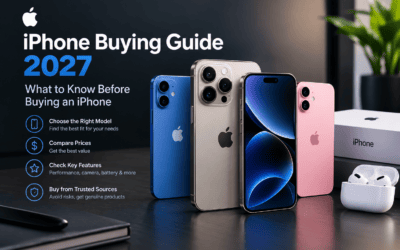



















































































Buying an iPhone in 2027 will involve more than choosing the newest model. Buyers in the United States will need to consider storage, battery health, camera performance, display technology, processing power, software support, connectivity, device condition and total ownership cost.
Apple’s current iPhone lineup already spans multiple generations and form factors, including the iPhone 18 Pro, iPhone 18 Pro Max and the newly introduced iPhone Duo. Apple’s official comparison page also lists previous iPhone generations, giving buyers a wide range of options at different price points. (Apple)
Because Apple’s 2027 lineup and specifications can change, the most useful approach is to understand which iPhone features actually matter before buying.
iPhone Buying Guide 2027: Quick Checklist
Before purchasing an iPhone, check:
- Storage capacity
- Battery health
- Processor performance
- Camera features
- Display size and quality
- iOS compatibility
- Apple Intelligence features
- 5G and carrier compatibility
- USB-C connectivity
- Physical condition
- Warranty
- Repair options
- Total purchase price
The right iPhone depends on how you use it rather than simply buying the most expensive model.
What Should I Check Before Buying an iPhone in 2027?
Start by identifying what you actually need from your phone.
If you primarily use an iPhone for calls, texting, social media, web browsing and streaming, you may not need every premium feature.
A photographer may care more about camera hardware and storage. A gamer may prioritize sustained processor and graphics performance. A business user may place greater importance on battery life, security and software support.
The most important areas to compare are performance, storage, battery, camera, display, software, connectivity and long-term support.
1. How Much iPhone Storage Do You Need?
Storage is one of the most important decisions because it cannot normally be upgraded after purchasing an iPhone.
Your storage can be consumed by:
- Photos
- 4K video
- Apps
- Games
- Messages
- Downloaded movies
- Music
- Podcasts
- Documents
- Offline content
Is 128GB enough for an iPhone?
For many everyday users, 128GB can be enough for normal applications, photographs, messaging and web browsing.
However, people who regularly record high-resolution video, download large games or keep extensive media libraries may need more capacity.
Is 256GB enough for an iPhone?
For users who take lots of photos and videos, 256GB can provide considerably more flexibility.
The best capacity depends on your current storage usage rather than simply choosing the largest number available.
How to choose iPhone storage
Check your current phone’s storage.
If your current device is regularly close to full, consider moving to a larger capacity when upgrading.
2. Check iPhone Battery Health
Battery health becomes particularly important when buying an older, used or refurbished iPhone.
Rechargeable lithium-ion batteries naturally lose capacity as they age. Apple provides battery-health information through iOS, with newer iPhone models offering additional battery information such as cycle count. (Apple)
How do you check iPhone battery health?
On supported iPhone models, open:
Settings → Battery → Battery Health
The exact information displayed can vary by iPhone generation and iOS version.
When buying a used iPhone, don’t look only at the battery percentage. Consider the phone’s age, condition, price and expected usage as well.
3. Don’t Buy an iPhone Based Only on Camera Megapixels
Camera resolution is only one part of smartphone photography.
When comparing iPhone cameras, consider:
- Main camera
- Ultra-wide camera
- Telephoto capabilities
- Optical stabilization
- Autofocus
- Low-light photography
- Portrait photography
- Video recording
- Image processing
- Front camera capabilities
Apple’s current iPhone lineup demonstrates how camera systems can differ between models. (Apple)
What iPhone is best for photography?
That depends on the type of photography you do.
Casual users may be satisfied with a standard camera system. People who regularly shoot distant subjects, professional-looking video or detailed photographs may want more advanced camera hardware.
4. iPhone Performance and Processor
The processor affects how quickly an iPhone handles applications and demanding tasks.
Performance matters for:
- Gaming
- Video editing
- Photography
- Artificial intelligence
- Multitasking
- Augmented reality
- Large applications
However, the newest processor isn’t automatically necessary for every buyer.
If your main activities are messaging, browsing, streaming and social media, you may not need the highest-performance model.
For demanding workloads, processor generation, graphics performance and sustained performance deserve greater attention.
5. iPhone Display: Size, Brightness and Refresh Rate
The display is one of the most frequently used parts of an iPhone.
Important factors include:
- Screen size
- Resolution
- Brightness
- Refresh rate
- Contrast
- Color accuracy
- Outdoor visibility
A larger screen can be useful for:
- Watching videos
- Gaming
- Reading
- Editing documents
- Multitasking
A smaller screen can be easier to carry and operate with one hand.
Choose the display size based on how you actually use your phone.
6. iOS Support Matters
Software support can determine how long an iPhone remains useful.
Before buying an iPhone in 2027, check:
- Supported iOS version
- Security updates
- New software features
- Hardware requirements for advanced features
- Application compatibility
Don’t assume that every iPhone running the newest iOS receives every feature.
Some features depend on hardware capabilities.
7. Apple Intelligence and AI Features
Artificial intelligence is becoming an increasingly important part of smartphone software.
Apple has expanded AI-related capabilities across its ecosystem, including newer Siri experiences and Apple Intelligence features.
When buying an iPhone in 2027, check whether the specific model supports the AI features you want rather than assuming every iPhone has identical capabilities.
This is particularly important if you are keeping the device for several years.
8. 5G and U.S. Carrier Compatibility
U.S. buyers should verify carrier compatibility before purchasing.
Common U.S. carriers include:
- AT&T
- T-Mobile
- Verizon
Also determine whether the phone is:
- Unlocked
- Carrier locked
- New
- Used
- Refurbished
An unlocked phone can offer more flexibility when switching carriers, but buyers should still verify compatibility with their chosen network.
9. USB-C and Accessories
Connectivity is another consideration when upgrading from an older iPhone.
Newer iPhone generations use USB-C, but capabilities can vary between models.
Before purchasing accessories, check the exact model and its charging and data-transfer specifications.
This can prevent buying incompatible cables, docks or other accessories.
10. New vs Used vs Refurbished iPhone
The cheapest iPhone isn’t necessarily the lowest-cost option over its entire ownership period.
New iPhone
A new iPhone generally provides predictable battery condition and standard purchase and warranty arrangements.
Used iPhone
A used iPhone can cost less, but check:
- Battery health
- Screen
- Cameras
- Face ID
- Speakers
- Microphones
- Charging port
- Physical damage
- Carrier status
- Activation status
- Parts and service information
Refurbished iPhone
Refurbished devices can offer another way to reduce the purchase price.
However, check:
- Who refurbished the device
- Warranty
- Return period
- Battery condition
- Replacement parts
- Seller reputation
11. Check the iPhone Warranty
Before buying, understand what protection is included.
Check:
- Standard warranty
- AppleCare+ eligibility
- Accidental-damage coverage
- Theft and loss coverage where available
- Battery service
- Return policy
Apple currently offers AppleCare options for eligible iPhone purchases, with coverage varying by plan and market. (Apple)
12. Consider Repairability and Long-Term Ownership
A smartphone is a long-term purchase for many consumers.
Before choosing a model, consider:
- Battery replacement
- Screen repair
- Parts availability
- Apple service options
- Warranty coverage
- Accessory availability
Battery aging is normal, so the possibility of battery service can matter if you intend to keep an iPhone for several years.
13. How Long Should an iPhone Last?
There is no universal lifespan for every iPhone.
Useful life depends on:
- Battery condition
- Software support
- Physical condition
- Storage
- Performance requirements
- Repair options
- Personal usage
A phone that remains fast and receives relevant software updates may continue to meet a user’s needs even after newer models are released.
iPhone Buying Guide 2027 for Different Users
iPhone for Everyday Users
Prioritize:
- Good battery life
- Enough storage
- Comfortable display
- Reliable camera
- Software support
- Carrier compatibility
iPhone for Students
Look for:
- Good battery endurance
- Enough storage
- Reliable performance
- Good camera
- Durable case options
- Video-call quality
iPhone for Photographers
Focus on:
- Camera sensors
- Optical stabilization
- Zoom capabilities
- Low-light performance
- Video features
- Storage
iPhone for Gamers
Pay attention to:
- Processor
- GPU performance
- Display refresh rate
- Thermal performance
- Battery
- Storage
iPhone for Business Users
Consider:
- Security
- Battery life
- Storage
- Productivity applications
- Connectivity
- Long-term software support
Common iPhone Buying Mistakes
Buying the largest storage option automatically
More storage is useful only if you actually need it.
Ignoring battery health on used iPhones
A low battery capacity can affect everyday convenience and may lead to additional replacement costs.
Choosing a camera based only on megapixels
Camera performance depends on the complete hardware and software system.
Ignoring carrier compatibility
A phone should be compatible with the network you intend to use.
Buying an old model without checking software support
Older hardware may eventually lose access to newer features.
Focusing only on monthly payments
Compare the total price, financing terms, trade-in value and other costs.
Should You Buy an iPhone in 2027?
That depends on your current device and what you need.
An upgrade may be worth considering if your current iPhone has:
- Poor battery endurance
- Insufficient storage
- Hardware damage
- Performance limitations
- Camera limitations
- Missing software features
- Compatibility limitations
If your current iPhone still performs well and meets your needs, there may be no practical reason to replace it simply because a newer generation exists.
iPhone Buying Checklist for U.S. Buyers
Before purchasing an iPhone, verify:
Model: Is it the exact model you intended to buy?
Storage: Is the capacity sufficient?
Battery: If used, what is the battery condition?
Carrier: Is the phone unlocked and compatible?
Condition: Is it new, used or refurbished?
Activation: Can the device be activated normally?
Warranty: What coverage is included?
Return policy: Can you return it if there is a problem?
Accessories: Which cable and charger do you need?
Price: What is the total cost after trade-in, financing or discounts?
Frequently Asked Questions
What should I check before buying an iPhone in 2027?
Check storage, battery health, processor performance, camera features, display, iOS support, AI features, carrier compatibility, condition, warranty and total price.
How much iPhone storage do I need?
Everyday users may be comfortable with lower storage capacities, while people who record lots of video, install large games or maintain large media libraries may need more.
Is 128GB enough for an iPhone?
It can be enough for many everyday users, but heavy photographers, video creators and gamers may benefit from a larger capacity.
How do I check iPhone battery health?
Open Settings → Battery → Battery Health on supported models. The exact information available depends on the iPhone generation and iOS version.
Should I buy a used iPhone in 2027?
A used iPhone can reduce the purchase cost, but check battery health, physical condition, activation status, carrier compatibility, repair history and warranty or return protection.
Is a refurbished iPhone worth considering?
A refurbished iPhone can be an alternative to buying new. Compare the seller, warranty, battery condition, return policy and total price before purchasing.
What iPhone should I buy for everyday use?
Look for a model with sufficient storage, reliable battery life, good performance, a camera that meets your needs and continued software support.
What iPhone is best for photography?
Compare the camera system rather than only megapixel numbers. Look at stabilization, sensors, lenses, zoom, low-light performance and video capabilities.
Is 5G important when buying an iPhone?
It can be useful depending on your carrier, location and data usage. U.S. buyers should verify compatibility with their specific carrier.
Do all iPhones support the same AI features?
No. AI-related features can depend on the iPhone model, processor and software version. Check Apple’s current compatibility information before purchasing.
Does every iPhone have the same camera?
No. Camera hardware and features vary between iPhone models and generations.
Should I upgrade my iPhone every year?
Not necessarily. Consider upgrading when your current phone no longer meets your requirements rather than upgrading solely because a newer model is available.
How long can an iPhone last?
The practical lifespan varies according to battery condition, software support, physical condition, performance requirements and how the phone is used.
Where can I compare iPhone models?
Apple’s official iPhone comparison page provides specifications for current and previous models. (Apple)
Final Takeaway
The best iPhone to buy in 2027 will depend on your budget and how you use your phone.
Instead of focusing only on the newest model, compare the features that affect everyday ownership: storage, battery health, processor performance, camera capabilities, display quality, iOS support, AI features, connectivity, warranty and total cost.
For U.S. shoppers, carrier compatibility and whether the device is unlocked are also important considerations.
Apple’s lineup is continuing to expand, including new form factors such as the iPhone Duo, so buyers should check Apple’s official specifications before making a final purchase. (Apple)