
Sector ETFs Explained: Should You Bet on a Single Industry?
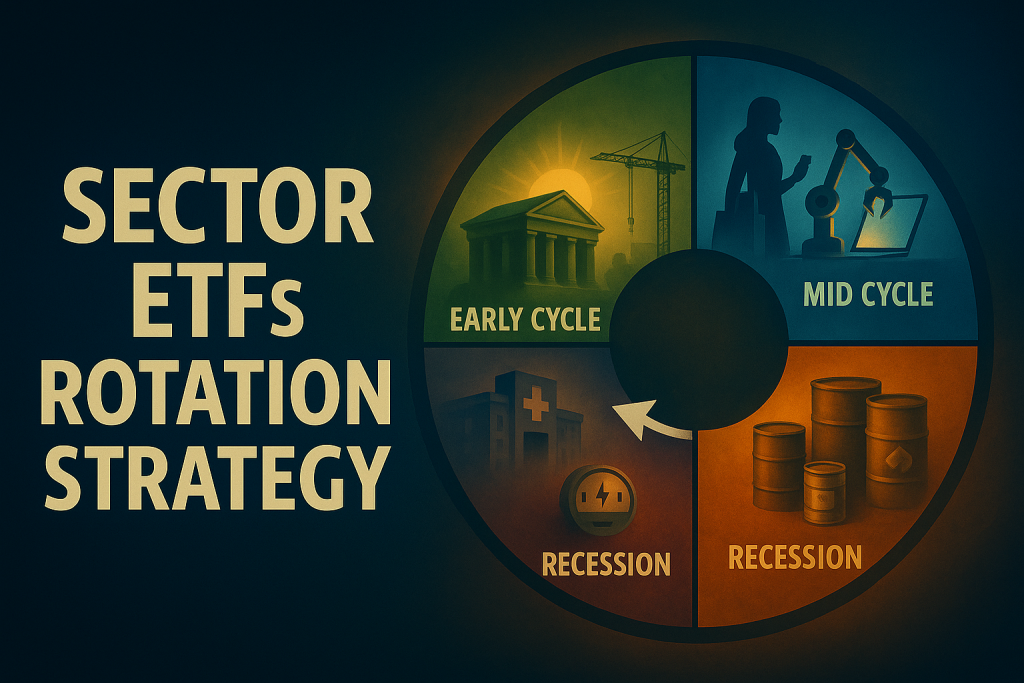
Sector ETFs let investors target a specific slice of the economy — technology, healthcare, energy, financials — rather than the broad market. They can be a useful tool, but they come with a different risk profile than diversified index funds.
What Is a Sector ETF?
A sector ETF holds a basket of companies operating within a single industry or economic sector, such as technology, healthcare, energy, utilities, or financials. Instead of diversifying across the whole economy, a sector ETF concentrates exposure in one area.
Why Investors Use Sector ETFs
- Targeted exposure: Investors who have a specific view on an industry’s prospects can express that view directly, rather than diluting it across a broad-market fund.
- Tactical allocation: Some investors use sector ETFs to tilt a portfolio toward sectors they believe are positioned to outperform in current economic conditions.
- Simplified access: Rather than researching and picking individual companies within a sector, a sector ETF provides instant diversification within that specific industry.
The Trade-Off: Concentration Risk
By definition, a sector ETF is less diversified than a broad-market fund. If that specific industry underperforms — due to regulatory changes, technological disruption, or broader economic shifts — the entire fund is affected, with no offsetting exposure to unrelated sectors that might be performing better.
Sector Performance Can Be Cyclical
Different sectors tend to perform well at different points in the economic cycle. Technology and consumer discretionary sectors often perform well during economic expansions, while utilities and consumer staples are sometimes viewed as more defensive during downturns. This cyclicality means sector ETFs can see significant swings depending on where the broader economy is in its cycle.
Questions to Ask Before Buying a Sector ETF
- Do I have a specific, researched reason to believe this sector will outperform, or am I chasing recent performance?
- What percentage of my overall portfolio would this represent, and am I comfortable with that level of concentration?
- Am I already diversified broadly elsewhere, making a sector tilt a smaller, calculated bet rather than my core holding?
How Sector ETFs Fit Into a Broader Strategy
Many investors who use sector ETFs do so as a smaller “satellite” position layered on top of a diversified core portfolio, rather than as their primary holding. This allows for a targeted view on a specific industry while keeping the bulk of the portfolio broadly diversified.
Common Mistakes
- Chasing a sector after it has already had a strong run, rather than before
- Treating a sector ETF as a core holding rather than a smaller, more concentrated position
- Underestimating how much a single regulatory or technological shift can affect an entire sector at once
Frequently Asked Questions
Are sector ETFs riskier than broad-market ETFs?
Generally yes, due to concentrated exposure to a single industry rather than the broader economy.
Can sector ETFs be used for diversification?
Only in a limited sense — combining several different sector ETFs can approximate broader diversification, but it requires more active management than simply holding a total market fund.
How much of my portfolio should be in sector ETFs?
There’s no universal rule, but many investors who use them keep sector bets as a smaller percentage of their overall portfolio rather than a primary holding.
Sector bets work best layered on top of a diversified core — see our guide to building a diversified ETF portfolio.
This article is for informational purposes only and does not constitute financial or investment advice.